
February 7, 2026
Fiber Cement Siding for Your Home: The Ultimate Guide
Discover benefits of a fiber cement siding home. Get durability, style & value. Learn costs, installation & why it's perfect for Michigan.
Why Fiber Cement Siding is Changing Homes Across Michigan
Fiber cement siding home exteriors are a top choice for homeowners seeking durability, beauty, and long-term value. This composite material provides decades of protection and delivers the classic look of wood, stone, or brick without the constant maintenance.
Quick Answer: What You Need to Know About Fiber Cement Siding
- What it is: A composite of Portland cement, sand, cellulose fibers, and water.
- Why it's popular: Resists fire, termites, rot, and extreme weather.
- How long it lasts: 50+ years with proper maintenance.
- What it costs: $5-$25 per square foot installed.
- Return on investment: 86% of costs recouped at resale.
- Best for: Michigan homeowners who want low-maintenance, weather-resistant siding.
For homes facing Michigan's harsh winters and humid summers, the right siding is crucial. Fiber cement has revolutionized the industry by combining the best attributes of other materials. In fact, it was used on 22 percent of all new homes in 2021.
Unlike wood, it won't rot or attract termites. Unlike vinyl, it won't melt or warp. And unlike brick, it won't break your budget. This guide covers everything you need to know to decide if fiber cement is the right choice for your Michigan home.
What is Fiber Cement Siding and Why is it So Popular?
Fiber cement siding is a robust building material that protects a home's exterior while providing significant aesthetic appeal. If you're wondering What is Fiber Cement Siding?, it's a composite made from Portland cement, sand, cellulose wood fibers, and water. This unique composition gives fiber cement its exceptional strength and resilience.
Its popularity comes from being tough, attractive, and paintable, offering the best of many worlds without the drawbacks of traditional materials.
- Durability: Engineered for various climates, fiber cement is impact-resistant, handling everything from stray baseballs to severe weather.
- Fire Resistance: Fiber cement is non-combustible with a Class A fire rating. It won't ignite or fuel a fire, which can sometimes lead to insurance discounts. Learn more on our page, Is Fiber Cement Siding Fire Resistant?.
- Pest Resistance: Termites, carpenter ants, and woodpeckers find fiber cement unappealing. It's impervious to wood-boring insects and rot, saving homeowners from costly repairs.
Its ability to combine aesthetic versatility with steadfast protection makes it an ideal long-term investment for Michigan homeowners.
The Best Advantages of Fiber Cement
The advantages of fiber cement siding are hard to ignore for any Michigan home.
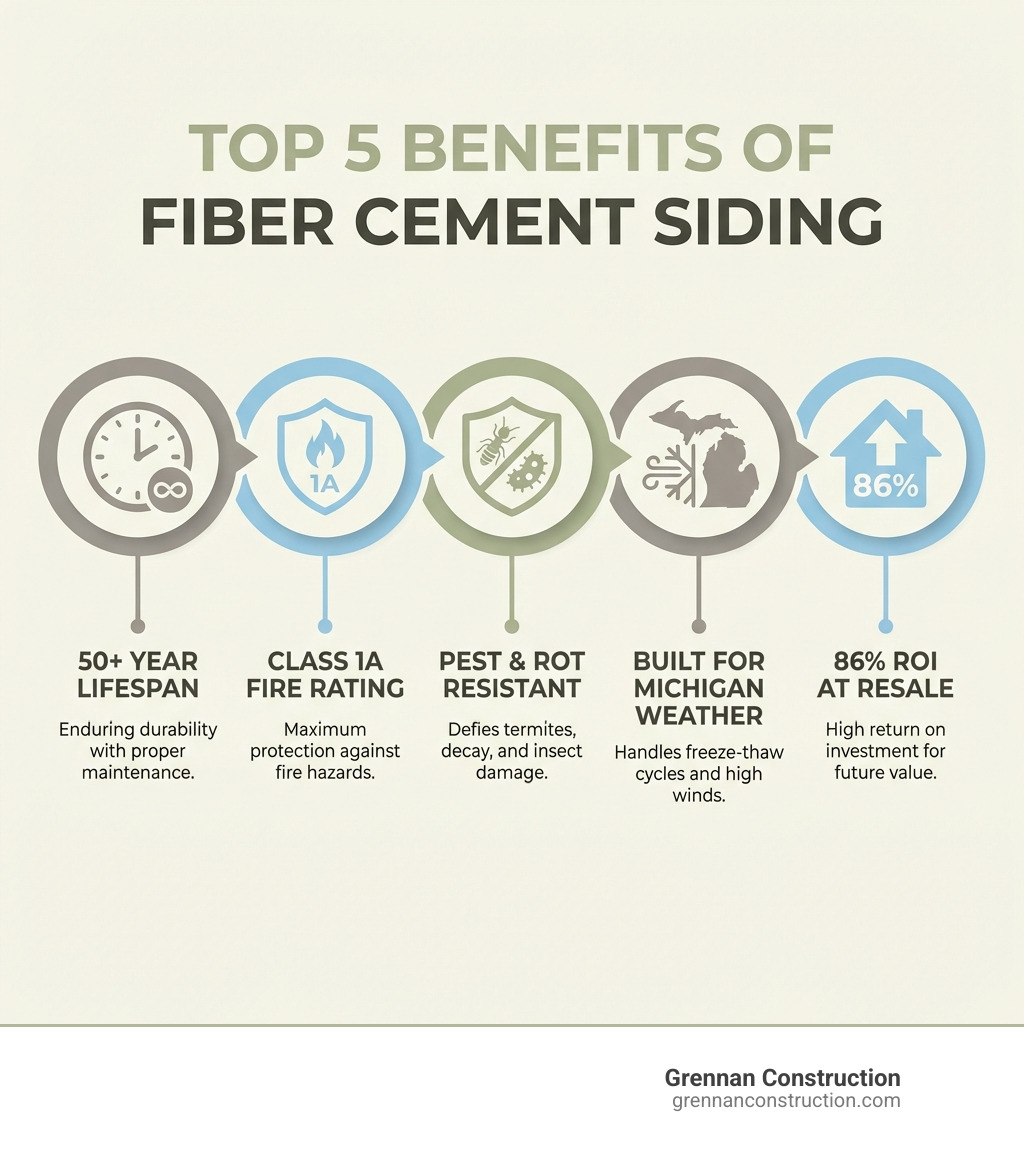
- Exceptional Longevity: With proper maintenance, fiber cement siding can last 50 years or more, making it one of the longest-lasting siding products available.
- Strong Fire Resistance: As mentioned, fiber cement is non-combustible and holds a Class 1A fire rating, offering maximum protection. Our article, Protect Your Home with James Hardie Fire-Resistant Siding, digs deeper into this benefit.
- Termite and Rot Proof: Unlike wood, fiber cement is resistant to termites, fungi, and rot, which is crucial in Michigan's humid climate.
- Reliable Weather Performance: Fiber cement is a champion against the elements. It withstands Michigan's freeze-thaw cycles, winds up to 130 mph, high humidity, and UV radiation. Explore its resilience in our guide to Weather Resistant Features of James Hardie Siding.
- High Return on Investment (ROI): A fiber cement siding home is a smart financial move. Homeowners can expect to recoup approximately 86 percent of the costs on resale, adding significant value to their property.
Potential Drawbacks and Considerations
While fiber cement offers many advantages, there are a few considerations to keep in mind:
- Initial Investment: As a premium product, fiber cement's initial cost is higher than vinyl, though typically less than brick or stone. Its longevity and low maintenance, however, often lead to long-term savings.
- Heavier Material: Fiber cement is dense, weighing about 2.5 pounds per square foot. Its weight makes it more prone to breakage if mishandled and contributes to the need for professional installation.
- Professional Installation Required: Due to its weight, specialized tools, and precision requirements, fiber cement is not a DIY project. Proper installation by experienced professionals is essential to prevent water damage and to keep the warranty valid. Learn more about The Importance of Proper Siding Installation for Long-Lasting Performance and find More about siding installation.
- Repainting Needs: While durable, fiber cement siding requires repainting every 10 to 15 years to maintain its appearance. Factory-applied finishes often carry a 15-year warranty.
- Installation Safety: Cutting fiber cement generates silica dust, which is harmful if inhaled. This requires specific safety precautions and specialized tools, reinforcing the need for trained professional installers.
A Deep Dive into the Pros and Cons of a Fiber Cement Siding Home
Choosing the right siding involves balancing aesthetics, durability, maintenance, and cost. A fiber cement siding home often delivers on all four fronts.
Cost vs. Value: While the initial cost is higher than some alternatives, its longevity and significant 86% return on investment at resale demonstrate its long-term value. The added cost is often recouped through durability and reduced future expenses.
Durability vs. Maintenance: Fiber cement is incredibly durable, resisting termites, impact, and fire. This translates into minimal maintenance compared to wood siding. While it needs repainting every 10-15 years, this is far less demanding than repairing rot or pest damage.
Aesthetics vs. Installation: Fiber cement's design versatility allows for any look, from traditional to modern. However, achieving this requires precise, professional installation due to the material's weight and specialized tools, ensuring both beauty and performance.
Here’s a quick comparison of fiber cement to other common siding materials:
| Siding Material | Cost (per sq ft, installed) | Lifespan | Maintenance Needs |
|---|---|---|---|
| Fiber Cement | $5 - $25 | 50+ years | Low (repaint 10-15 yrs, clean annually) |
| Wood Siding | $7 - $13 | 20-40 years | High (frequent painting/staining, pest/rot treatment) |
| Vinyl Siding | $3 - $12 | 20-40 years | Low (cleaning, can fade/crack/warp) |
| Brick | $9 - $28 | 100+ years | Very Low (occasional mortar repair) |
Note: Costs are approximate and can vary based on region, product quality, and installation complexity.
Understanding the Cost of a Fiber Cement Siding Home
Understanding the investment in a fiber cement siding home is crucial. The total cost includes both materials and specialized installation.
Professionally installed fiber cement siding typically ranges from $5 to $25 per square foot. For a 1,500-square-foot home in Michigan, project costs might fall between $27,000 and $30,000.
Several factors influence the overall cost:
- Material Costs: The product type (lap, shingle, panel), texture, and finish (primed vs. factory-painted) affect the price.
- Labor Costs: Labor is a significant portion of the cost due to the material's weight and the need for specialized tools and expertise.
- Project Complexity: Intricate architecture, multiple stories, or difficult access can increase labor costs.
- Finish Options: Factory-painted siding (like James Hardie's ColorPlus® Technology) costs more upfront but provides a durable, warrantied finish, saving on immediate painting costs.
While more expensive than vinyl, fiber cement's durability and high ROI make it a wise investment. For a detailed breakdown, review The Cost of James Hardie Siding Installation: Factors to Consider. For market trends, see Are Siding Prices Increasing in 2023?.
Lifespan, Warranty, and Maintenance Needs
A key benefit of a fiber cement siding home is its long lifespan and low maintenance.
- Typical Lifespan: With proper installation, fiber cement siding can protect your home for 50 years or more, far surpassing many other materials.
- Warranty Period: Leading brands offer impressive warranties, often 30 years to a limited lifetime. Factory-applied finishes typically include a 15-year warranty against flaking and fading. Look for non-prorated, transferable warranties for the best value.
- Cleaning Routine: Maintenance is simple. Wash the siding annually with a garden hose and a soft brush. If using a pressure washer, use low pressure (under 1,500 psi) from a distance to avoid damage. Get more advice from our Tips for Cleaning Your Siding.
- Recaulking and Repainting: Inspect caulk around windows and joints every few years and reapply as needed to maintain a watertight seal. Plan to repaint every 10 to 15 years with high-quality acrylic paint to keep your home looking its best. Find more information on our Siding Maintenance page.
Design Versatility: Styles, Textures, and Finishes
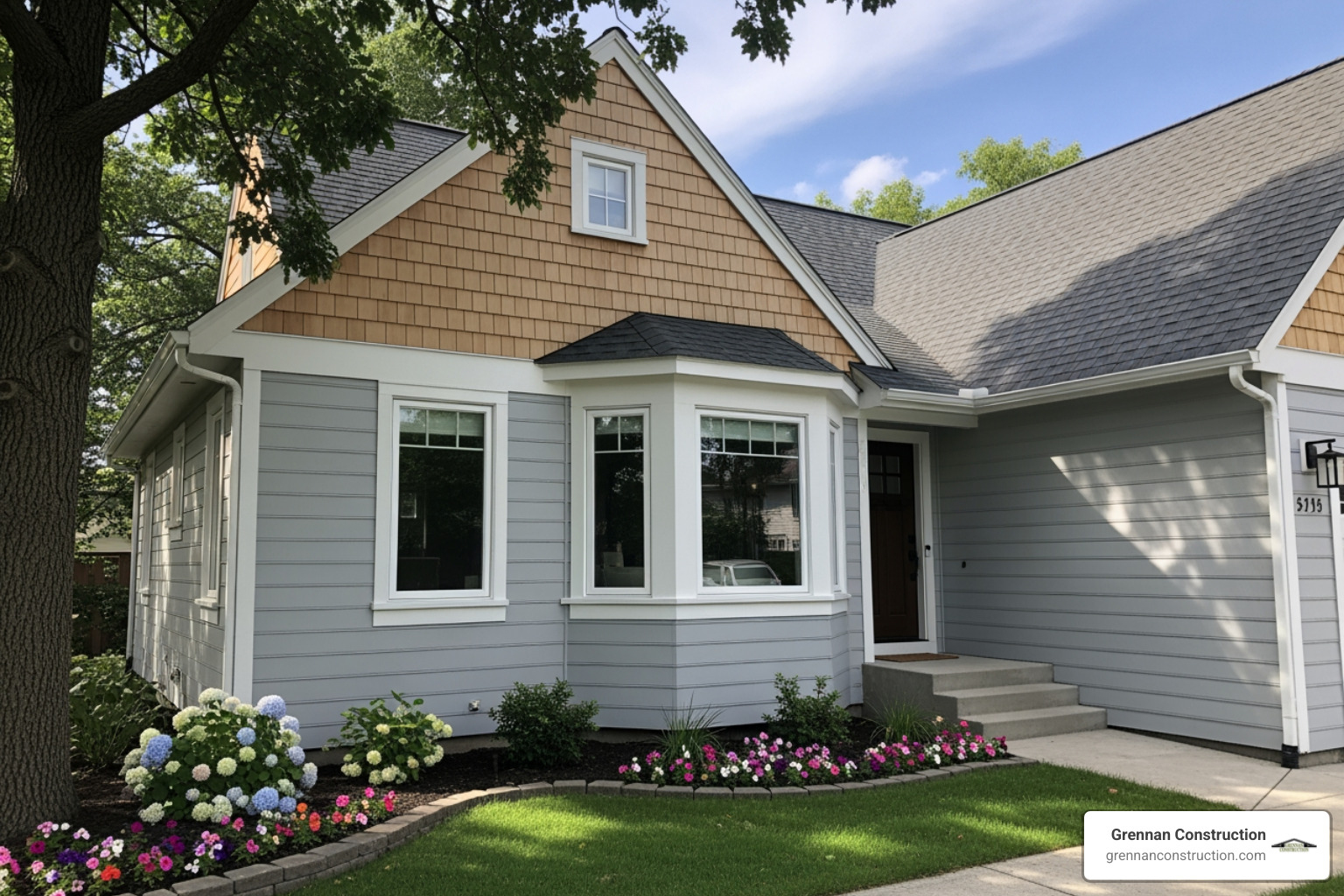
One of the most exciting aspects of fiber cement is its incredible design versatility. A fiber cement siding home can be customized to achieve nearly any aesthetic, from classic charm to ultra-modern sophistication. It combines the performance of masonry with the look of painted wood, shingles, or stone without the high maintenance.
Popular fiber cement styles include:
- Lap Siding (Clapboard): The most common style, creating timeless horizontal lines suitable for a wide range of home designs.
- Shingles & Shakes: Ideal for a rustic or Craftsman look, these mimic cedar shakes without the vulnerability to rot, pests, or fire. They can be used to create decorative patterns on gables and other features.
- Panels (Smooth & Textured): Offering a contemporary, streamlined look, panels can be installed vertically or horizontally. They create clean lines perfect for modern designs and can mimic stucco or stone.
- Board & Batten: This vertical style uses wide boards and narrow battens to create a charming, rustic look that can make a home appear taller. Learn more on our page, What is Board and Batten Siding?.
Achieving Your Perfect Look
The aesthetic possibilities for a fiber cement siding home are expanded by a wide range of textures, finishes, and colors.
- Textures: Choose from woodgrain for a natural look, smooth for a clean, modern aesthetic, or stucco for the appearance of traditional stucco with better durability.
- Finishes: Siding is available primed for paint, allowing for custom colors after installation, or factory-painted. Pre-finished siding, like James Hardie's ColorPlus® Technology, offers a durable, baked-on, fade-resistant coating with a 15-year warranty, saving time and labor.
- Color Options: The color possibilities are endless, from classic neutrals to bold, modern hues. Explore the palette in Exploring James Hardie Siding Color Options for Exterior Home Design.
- Trim and Soffit: Complete your home's look with matching fiber cement soffit, fascia, and trim pieces for a cohesive, protected exterior.
These diverse options can dramatically lift your home's curb appeal. Our article Elevating Curb Appeal with James Hardie Siding offers more inspiration.
Installation and Safety: What Every Homeowner Should Know
Proper installation is paramount to realizing the benefits of a fiber cement siding home. This is not a DIY project; the material's properties demand professional handling, specialized tools, and strict safety protocols to prevent water damage, ensure longevity, and maintain the warranty. As a James Hardie Preferred contractor, our team is trained in the precise techniques required.
The Installation Process for a Fiber Cement Siding Home
Installing fiber cement is a complex process requiring meticulous preparation and expertise.
- Not a DIY Project: Fiber cement is heavy (about 2.5 lbs/sq ft), difficult to handle, and requires special tools for cutting. A DIY attempt can void warranties and compromise your home's protection.
- Weather-Resistant Barrier: A robust house wrap is installed first as a secondary defense against moisture.
- Flashing: Metal flashing is installed around windows, doors, and seams to direct water away from vulnerable areas.
- Nailing and Clearances: Specific nailing patterns with rust-resistant nails are required to withstand high winds. Precise clearances from roofs, decks, and the ground (6 inches) are crucial to prevent moisture wicking.
- Specialized Tools: Professionals use tools like pneumatic shears and dust-reducing saws for clean cuts and to manage dust.
For a look at the process, watch this Cement Fiber Siding Installation guide from Bob Vila. Entrusting installation to professionals ensures quality and compliance. Learn How to Choose the Right Siding Contractor for James Hardie Installation.
Critical Safety Measures: Handling Silica Dust
A critical safety concern during installation is managing silica dust. Cutting fiber cement boards releases fine particles of crystalline silica, which can pose significant health risks if inhaled.
- Health Risks: Long-term exposure to silica dust can lead to serious lung diseases like silicosis, lung cancer, and COPD.
- OSHA Compliance: Professionals must adhere to strict OSHA guidelines for silica exposure to protect workers' health.
- Safety Measures: To minimize dust, trained installers use proper cutting methods (like wet cutting or dust-reducing saws), dust collection systems, and Personal Protective Equipment (PPE) such as respirators and safety glasses. The CDC has shown that connecting a shop vacuum to a saw can reduce dust exposure by 80-90%. See the CDC research on reducing hazardous dust.
These safety requirements are another key reason why fiber cement installation should only be performed by trained professionals.
Frequently Asked Questions about Fiber Cement Siding
Is fiber cement siding an environmentally friendly choice?
Yes, fiber cement siding is a sustainable choice.
- Sustainability: Its production incorporates sustainable practices. For example, industry leader James Hardie sources 90 percent of its materials from regional suppliers and uses waste minimization technologies. Some products also include recycled materials like fly ash.
- Durability Reduces Waste: A lifespan of 50+ years means less frequent replacement, significantly reducing construction waste and the environmental impact of manufacturing new materials.
While no material is without environmental impact, fiber cement's durability and responsible manufacturing make it a strong choice for green-conscious homeowners. Explore More about home upgrades on our site.
How does fiber cement perform in Michigan's climate?
A fiber cement siding home is exceptionally well-suited to withstand Michigan's challenging climate.
- Freeze-Thaw Cycle Resistance: Unlike vinyl, fiber cement won’t crack or become brittle from repeated freezing and thawing, ensuring it stays intact through harsh winters.
- Withstands High Winds: With proper installation, it can withstand winds up to 130 mph, offering crucial protection against severe storms.
- Resists Moisture and Humidity: Fiber cement resists moisture, rot, and mold, which is essential in Michigan's humid summers and wet springs.
- UV Resistance: The material is unaffected by strong UV radiation, helping to prevent fading and degradation over time.
In short, fiber cement is built to last in Michigan. For more regional benefits, see Top 5 Advantages of James Hardie Siding for Homes in Oakland County, Michigan and our page on Weather-Resistant Siding.
Who is the leading manufacturer of fiber cement siding?
When it comes to fiber cement siding, one manufacturer stands out for its quality, innovation, and product range.
- Industry Pioneer and Brand Quality: James Hardie is the founder of fiber cement siding and the world leader in the category. They brought the technology to market in the 1990s and have built a reputation for the highest quality. The term "Hardie board" has become synonymous with fiber cement siding, a testament to their market leadership. You can learn more on our What is Hardie Board? page.
- Product Innovation: James Hardie is known for innovations like the HardieZone® system, which engineers siding specifically for different climates. This ensures optimal performance in Michigan's freezing winters and humid summers. They also offer a complete range of siding, trim, soffit, and fascia products for a cohesive exterior.
As a James Hardie Preferred contractor, we trust their products to provide the best performance and quality for our projects across Michigan.
Conclusion: Is Fiber Cement the Right Choice for Your Michigan Home?
A fiber cement siding home is a strategic investment in your property's longevity, beauty, and protection. It offers a compelling package for Michigan homeowners.
To recap, fiber cement siding delivers:
- Best Durability: It stands strong against Michigan's weather, resisting rot, termites, fire, high winds, and freeze-thaw cycles.
- Exceptional Aesthetics: A vast array of styles, textures, and colors allows you to achieve any architectural vision, from classic to modern.
- High ROI: With an 86% return on investment, fiber cement adds tangible value to your property while improving curb appeal.
For a low-maintenance, weather-resistant, and beautiful exterior, fiber cement is an outstanding choice for Michigan's climate.
At Grennan Construction, a family-owned Oakland County company, we specialize in expert installation of premium materials. As a James Hardie Preferred contractor, we ensure your project meets the highest standards. Our 25+ years of trust are built on honest, stress-free service custom for Michigan weather.
Ready to transform your home?
Get a free quote for your James Hardie siding project in Michigan today!
Check Out More Blog Articles

Increased Roofing Prices In 2022?
In Oakland County, Michigan, there will be a considerable cost increase to replace your roof in 2022. This last year alone, roofing contractors have seen a 5% - 10% increase in material costs. Continue reading for additional information.

When the Sky Falls: A Guide to Storm Damage Roof Repair
Discover storm damage roof repair in Michigan: identify damage, file claims, hire pros & avoid scams. Free estimate!

Signs its Time to Replace Your Roof and Siding
Knowing when it's time to update your roof and siding is key to maintaining your home's integrity. Learn the signs it's time to replace your roof and siding.
CONTACT US
Open 24 Hours 7 Days a Week
OUR SERVICE AREA
We proudly serve Auburn Hills, Berkley, Birmingham, Bloomfield Hills, Clawson, Clarkston, Commerce, Davisburg, Farmington Hills, Ferndale, Franklin, Hazel Park, Highland, Holly, Huntington Woods, Lakeville, Leonard, Keego Harbor, Lake Angelus, Lake Orion, Metro Detroit, Milford, Madison Heights, New Hudson, Novi, Oak Park, Oakland, Oakland County, Orchard Lake Village, Pleasant Ridge, Pontiac, Rochester, Rochester Hills, Southeast Michigan, Sylvan Lake, South Lyon, Southfield, Union Lake, Walled Lake, Troy, Villages of Franklin, Lake Orion, Ortonville, Oxford, Waterford, White Lake, West Bloomfield, & Wixom.


